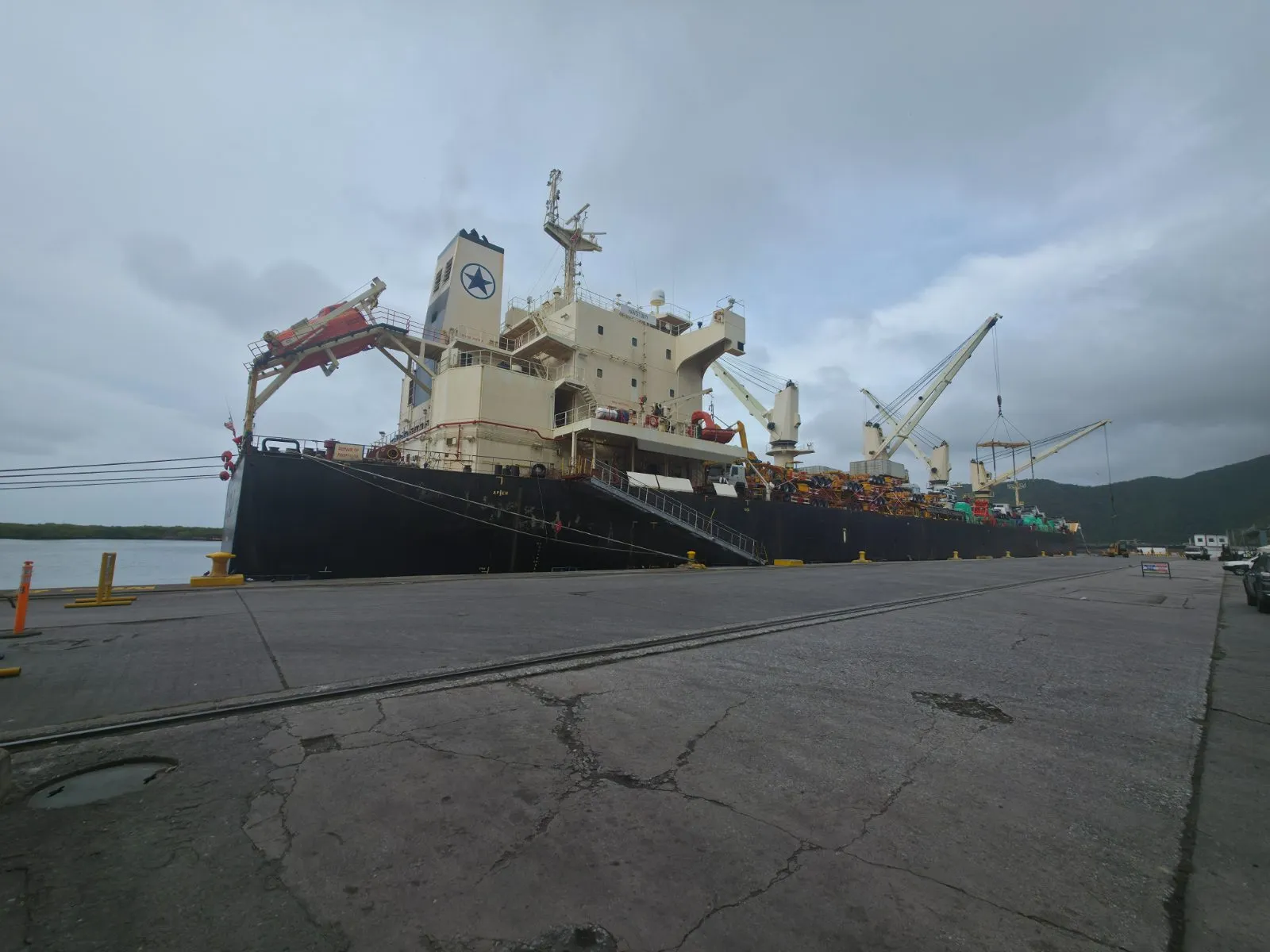
To import project cargo into Venezuela, define every unit and its sequence, validate classification and permits before shipping, file the declarations on time, and keep customs work separate from engineering, port handling and inland transport.
Project cargo is a logistics operation connected to an industrial plant, construction project or expansion. It may include heavy equipment, oversized units, critical components and several shipments that must arrive in a specific order. It is not a separate Venezuelan customs regime: each item follows the rules that apply to its classification, origin, value and use.
What is project cargo, and what is not?
Project cargo is not defined by size alone. What sets it apart is the combination of technical complexity, importance to the project, sequence and coordination among several parties.
These concepts overlap, but they do not mean exactly the same thing:
- Oversized or OOG cargo: a unit exceeds the dimensions of standard transport equipment.
- Heavy or heavy lift cargo: the weight requires special lifting, support or securing equipment and calculations.
- Project cargo: an integrated operation may combine standard, OOG and heavy lift units to meet a project's schedule.
- Phased shipment: this only describes several departures or arrivals. By itself, it does not make an import project cargo.
A backhoe, forklift, truck or tractor that travels conventionally may follow the process for importing heavy machinery and trucks. If it is part of an operation with special handling, related components or a critical sequence, it may also be included in project cargo.
If the goods travel in standard boxes, pallets or containers and do not require technical planning tied to a project, see our guide on how to import general cargo into Venezuela.
Technical information to collect before requesting a quote
A description such as “complete industrial plant” is not enough to design transport or review customs requirements. Prepare the information for each unit:
- technical and commercial name, function, make and model;
- length, width, height and gross weight;
- center of gravity, when defined by the manufacturer;
- lifting, support and securing points;
- drawings, photographs and technical data sheet;
- packaging and protection against moisture, impact or outdoor storage;
- place of origin, port of loading, port of arrival and final destination;
- number of shipments and arrival sequence of critical components.
Chapter 45 of Carefully to Carry, published by the UK P&I Club, recommends documenting the characteristics of each heavy-lift or project cargo unit, including its dimensions, weight, marks, center of gravity, and safe lifting and securing points. These details support engineering and logistics safety; they are not, by themselves, a list of Venezuelan legal customs requirements.
Packaging also depends on the means of transport, route, handling and carrier requirements. IUMI summarizes those factors in the overview of its effective export packaging webinar.
How can project cargo travel?
The transport mode is selected for each unit, and a project may combine several:
- Closed container: for auxiliary components that fit and can be secured conventionally.
- Open top: for units that must be loaded from above or exceed the height of a closed container.
- Flat rack: for equipment that exceeds standard width or height and can be secured to a platform.
- RORO (roll-on, roll-off): for wheeled equipment or units mounted on a platform that enters the vessel by ramp.
- Breakbulk or heavy lift: for individual units that need a lifting and stowage plan designed for them.
The technical data sheet does not select the mode by itself. The carrier, logistics operator and engineering team review capacity, weight distribution, securing, packaging, route and terminal conditions before confirming the plan.
Documents for a quote and documents for customs
These two document sets are related, but they are not identical.
The five documents UNICA requests for a complete quote
- Commercial invoice.
- Packing list, identifying every unit.
- BL (Bill of Lading) or the available draft.
- Ocean freight value.
- Technical data sheet for each unit.
If the final BL is not available yet, send the documents you have and we will tell you what is missing. For project cargo, drawings, photographs, weights, dimensions and the estimated shipment sequence are also useful.
What the customs declaration requires
The import file includes the customs declaration, final commercial invoice, transport document and the documents legally required for the goods. A certificate of origin is not universal: it is included when origin must be proven, a tariff preference is requested, or a product or customs regime requires it.
Each shipment must match its invoice, packing list, transport document and actual goods. If the project arrives in phases, the file for each arrival is reviewed within a common plan.
Classification, permits and benefits before shipping
It is not correct to assign one tariff code automatically to every package. Tariff classification depends on what the goods are, their function, material and presentation, and whether they are complete equipment, a part, an accessory or a set. The data sheet supports the analysis; the Customs Administration retains the official determination.
Classification also identifies the permits or registrations you need. Cargo does not require additional authorizations simply because it is called “project cargo”: requirements depend on the specific goods and must be checked before shipping.
Some tariff subheadings identified as capital goods or information and telecommunications goods may qualify for a tariff reduction and, where applicable, a VAT benefit. This is not automatic because the item is industrial machinery: the subheading, COMEX certificate and current conditions must be verified for the operation.
The customs process in Venezuela
1. Pre-shipment review
The commercial invoice, packing list, technical data, weights, dimensions, origin, value and use are cross-checked. The parties also separate what belongs in the customs file from what belongs in the transport or lifting plan.
2. Classification and permits
The customs broker analyzes the goods and reviews the legal regimes attached to each subheading. Permits should be resolved before the cargo arrives and, whenever the case allows it, before it ships.
3. Advance declaration
For ocean cargo, Venezuela's current Customs Law generally requires an Advance Information Declaration before arrival, subject to the applicable deadline and exceptions. UNICA confirms the timing when reviewing the file.
4. Arrival, customs declaration and inspection
After entry, the customs declaration is filed with the corresponding documents within the deadline applicable to the operation. Customs inspection may be documentary, physical, selective or random.
The carrier, terminal and authorized operators perform the discharge and physical handling. The customs broker follows the customs procedure, files the documents and coordinates the required information on the importer's behalf.
5. Customs release and exit
Once requirements are met and duties are paid, the authority grants release when appropriate. The terminal releases the cargo, and the inland carrier transports it under the route plan, using the assigned vehicle and any permits required by the dimensions, weight or route.
Who does what in a project cargo operation?
| Party | Main responsibility |
|---|---|
| Importer or project owner | Provides accurate data, commercial documents and project schedule priorities |
| Engineering team, logistics operator or surveyor | Validates weights, centers of gravity, lifting, support, securing, packaging, route and method statement within the contracted scope |
| Carrier, terminal and port operators | Perform ocean transport, stowage, discharge and the physical handling assigned to them |
| Customs broker | Analyzes classification, reviews permits, prepares and transmits declarations, and follows the customs procedure |
| Inland carrier | Provides suitable equipment, reviews the route and obtains the authorizations or escorts that apply |
| SENIAT and other authorities | Verify the declaration, requirements and goods, and authorize release when appropriate |
UNICA manages the customs procedure and coordinates the documents with the other parties. That is the role of a customs broker in Venezuela: it does not replace the lifting engineer, port operator, surveyor or inland carrier.
How do you control a project that arrives in phases?
Use a master plan that identifies:
- which unit arrives in each shipment;
- which invoice, packing list and BL support it;
- which tariff code and permit were reviewed for each item;
- which components are critical to assembly;
- which handling and inland transport were prepared for each arrival;
- who approves a change in weight, dimensions, packaging or sequence.
The master plan does not replace the individual customs files. Its purpose is to prevent the documents, transport operation and project schedule from telling different stories.
How much does it cost to import project cargo?
There is no single rate. The total may include:
- tariff, VAT, customs fee and any other applicable taxes;
- ocean freight, insurance, lashing and packaging;
- engineering, survey and lifting or securing plans when contracted;
- terminal services, cranes and port handling;
- platforms, lowboys, route studies, permits and inland escorts when applicable;
- storage and delay charges;
- customs broker fees.
With complete information, UNICA prepares the customs quote and replies the same business day. If technical details are still missing, we will tell you what to request from the manufacturer, carrier or logistics operator before you commit to shipping.
Mistakes that affect the project schedule
- Quoting with estimated weights or dimensions. A change may affect the equipment, freight, lift and route.
- Confusing a package with a tariff classification. The number of physical units does not automatically determine how many subheadings are declared.
- Shipping before checking permits. Being part of an industrial plant does not remove the legal regimes attached to the subheading.
- Using documents that do not match. The invoice, packing list, BL, data sheet and marks must describe the same goods.
- Leaving inland transport until the end. The vehicle, route and authorizations should be confirmed before the unit is available for pickup.
- Making the customs broker responsible for everything. Customs, engineering and physical handling are separate areas with different parties responsible for each one.
What UNICA does for project cargo
UNICA reviews the file before shipment, analyzes classification, identifies customs permits, prepares the declarations and follows the procedure through customs release. We also keep the customs information aligned with the carrier, terminal and specialists contracted by the importer.
UNICA is based in Puerto Cabello, has more than 20 years of experience and handles customs operations through the ports of Puerto Cabello, La Guaira and Maracaibo. See our project cargo service or request a review of your operation.
Frequently asked questions
How do you export project cargo to Venezuela from another country?
For the supplier and operators in the country of origin, the shipment leaves as an export. When it enters Venezuela, it is processed as a project cargo import and its equipment, documents, permits and logistics sequence are reviewed.
UNICA handles review and customs clearance in Venezuela. The export declaration and any origin-country formalities remain the responsibility of the supplier and its authorized operators.
What is project cargo?
It is an operation connected to a construction or industrial project that combines critical equipment, complex units or a special logistics sequence. It may include standard, oversized and heavy cargo. It is not a separate customs regime in Venezuela.
Is every oversized unit project cargo?
No. A single OOG unit may be a special transport without being part of a project. It becomes project cargo when it is integrated into a larger operation with coordinated planning, parties and schedule.
What information do I need for a quote?
Commercial invoice, packing list, BL or draft, ocean freight value and technical data sheet. Logistics planning also needs weights, dimensions, center of gravity when defined, lifting and securing points, packaging, photographs, route and sequence.
Is a certificate of origin always required?
No. It is submitted when origin must be proven, a tariff preference is requested, or an applicable product or customs regime requires it.
Does every piece need a different tariff code?
Not necessarily. Classification depends on how the goods are presented and on the nomenclature rules, not only on the number of packages. The customs broker analyzes and supports the subheading, while the Customs Administration retains the official determination.
Who coordinates the crane and discharge?
Physical handling belongs to the carrier, terminal and contracted operators or specialists, according to the operation agreement. The customs broker manages the customs procedure and coordinates information on the importer's behalf.
Can a project be imported in several shipments?
Yes. Each arrival keeps its transport document and customs file, while a master plan controls the units, permits, sequence and responsible parties. A simple phased shipment without this complexity does not automatically become project cargo.
Do I need a customs broker?
Yes, as a general rule. Venezuela's Customs Law requires declarations and customs regime procedures to be handled through an authorized customs broker or agency, subject to its express exceptions.
Do you have the weights, dimensions and documents for your project? Request a review of your operation and we will tell you the next step the same business day.